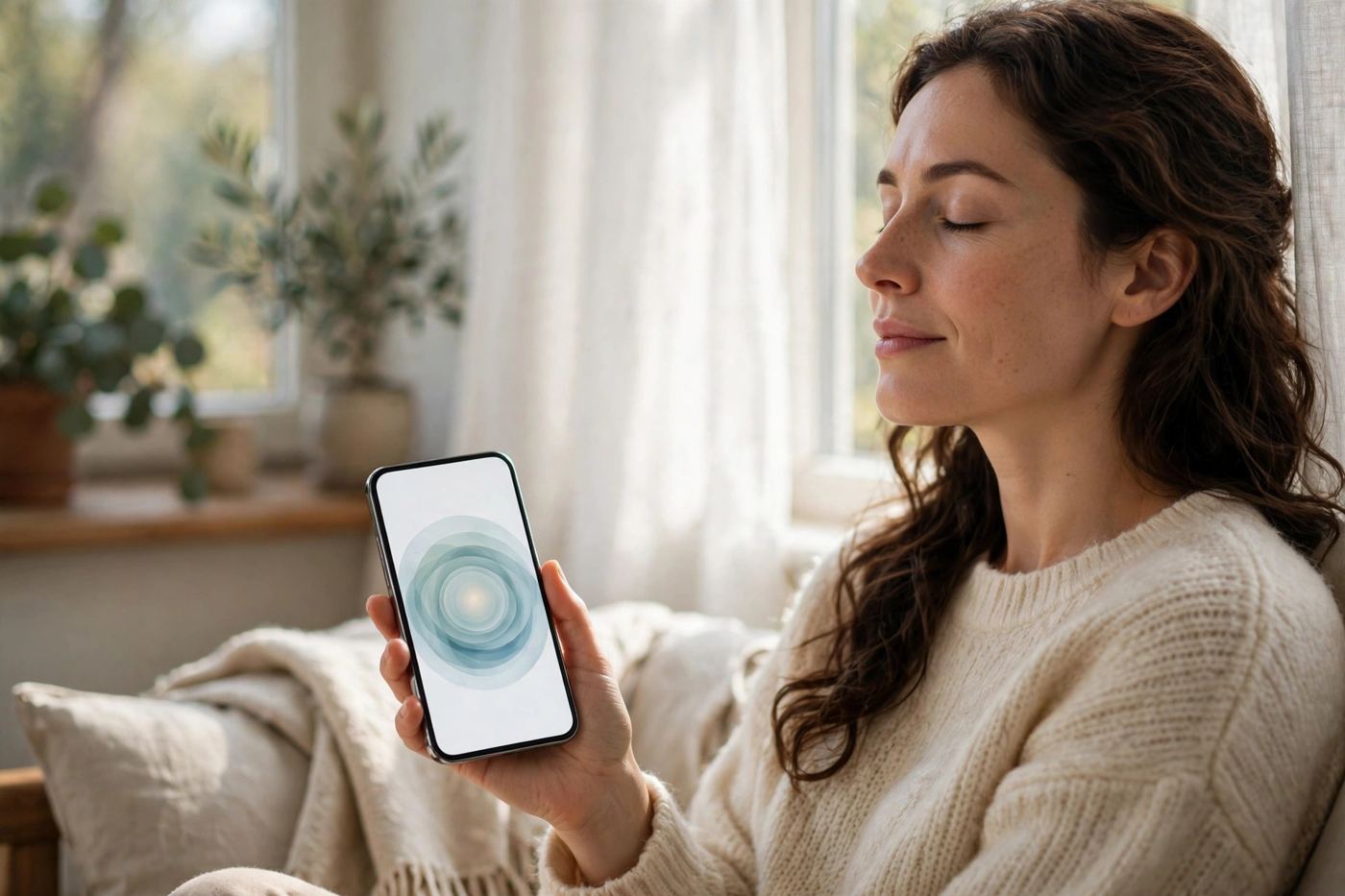
Open any app store’s health chart and serenity is for sale by subscription. Mindfulness apps promise reduced stress, better sleep and a quieter mind in ten minutes a day, and tens of millions of people have decided that is worth paying for. Now, after a decade of commercial success, the research community has accumulated enough trials to ask an impolite question with actual data: how much of it works?
The fairest summary is that something real is there, and it is smaller than the advertisements. Meta-analyses pooling randomised trials of app-based mindfulness typically find small-to-moderate improvements in perceived stress and anxiety compared with doing nothing, and smaller or inconsistent advantages over other active controls like listening to music or reading. Effects on sleep and wellbeing follow the same pattern: genuine, modest, and heavily dependent on whether people keep practising. We follow this evidence as it develops in our health coverage, where the gap between wellness marketing and wellness research is a standing beat.
Why modest effects still matter
A small average effect is not the same as no effect. For a person with mild anxiety who will never join an eight-week in-person course, an app that helps even slightly, at low cost and zero waiting list, is a rational purchase. The National Institutes of Health has funded work on digital mental-health tools precisely because the reach is unmatched: an intervention that helps a little, for millions of people, is a public-health fact, not a rounding error.
The adherence problem nobody can meditate away
The industry’s least discussed number is attrition. Most mindfulness apps lose the large majority of new users within a month, which mirrors the dropout pattern of every self-guided health behaviour from gym memberships to language courses. Researchers increasingly argue that the honest comparison is not app versus therapy but app versus nothing, for the large population that would otherwise do nothing at all.
Design may narrow the gap: shorter practices, content tied to specific moments like commutes and insomnia, and honest streak mechanics that reward return after lapses rather than punishing them. Calm, it turns out, has a retention problem like everything else.
Where the criticism lands
The sharper critiques concern claims, not calm. Apps are generally poor substitutes for treatment of serious conditions, trials often rely on self-selected users and short follow-ups, and the industry’s favourite statistic, downloads, says nothing about benefit. There is also an irony researchers note dryly: an intervention for attention delivered through the most attention-hostile device ever made.
The mature view is that mindfulness apps belong in the category of useful, limited tools, like a home blood-pressure cuff. Valuable in their place, honest about their limits, and no replacement for a professional when the readings get serious.