Numbers in computing need translators, and 104 is a number worth translating carefully. When NVIDIA researchers used JUPITER — Europe’s first exascale supercomputer, at Forschungszentrum Jülich — to simulate a 104-qubit fault-tolerant quantum computer, they set a record in a field where records are usually measured in single added qubits. Understanding what was actually demonstrated, and what was not, is the difference between appreciating a genuine milestone and falling for a headline.
Start with why simulation is hard. A quantum computer’s state cannot be written down compactly: in the worst case, describing n qubits takes 2-to-the-n numbers. At 50 qubits that is already a petabyte-scale problem; at 104, naive description is beyond astronomical. Any simulation at this scale succeeds only by exploiting structure — and a fault-tolerant quantum computer has a great deal of structure to exploit.
The Fault-Tolerance Twist
Fault-tolerant quantum computing organises fragile physical qubits into error-correcting codes, where information lives in patterns spread across many qubits and errors are detected by measuring the patterns rather than the data. That architecture, paradoxically, is what makes large-scale simulation tractable at all: stabiliser-based methods can track error-correction circuitry far more efficiently than a raw state vector, especially when the goal is to model how errors propagate, get detected and get corrected — the behaviour engineers actually need to study.
So the JUPITER result is best understood as a simulation of the machinery of reliability. It lets researchers ask, at realistic scale, whether a given code and decoder keep logical error rates falling as the system grows — the threshold behaviour on which the entire fault-tolerant project depends. The EuroHPC programme that built JUPITER describes the machine’s role in European research through the EuroHPC Joint Undertaking.
Why an Exascale Machine Was the Right Tool
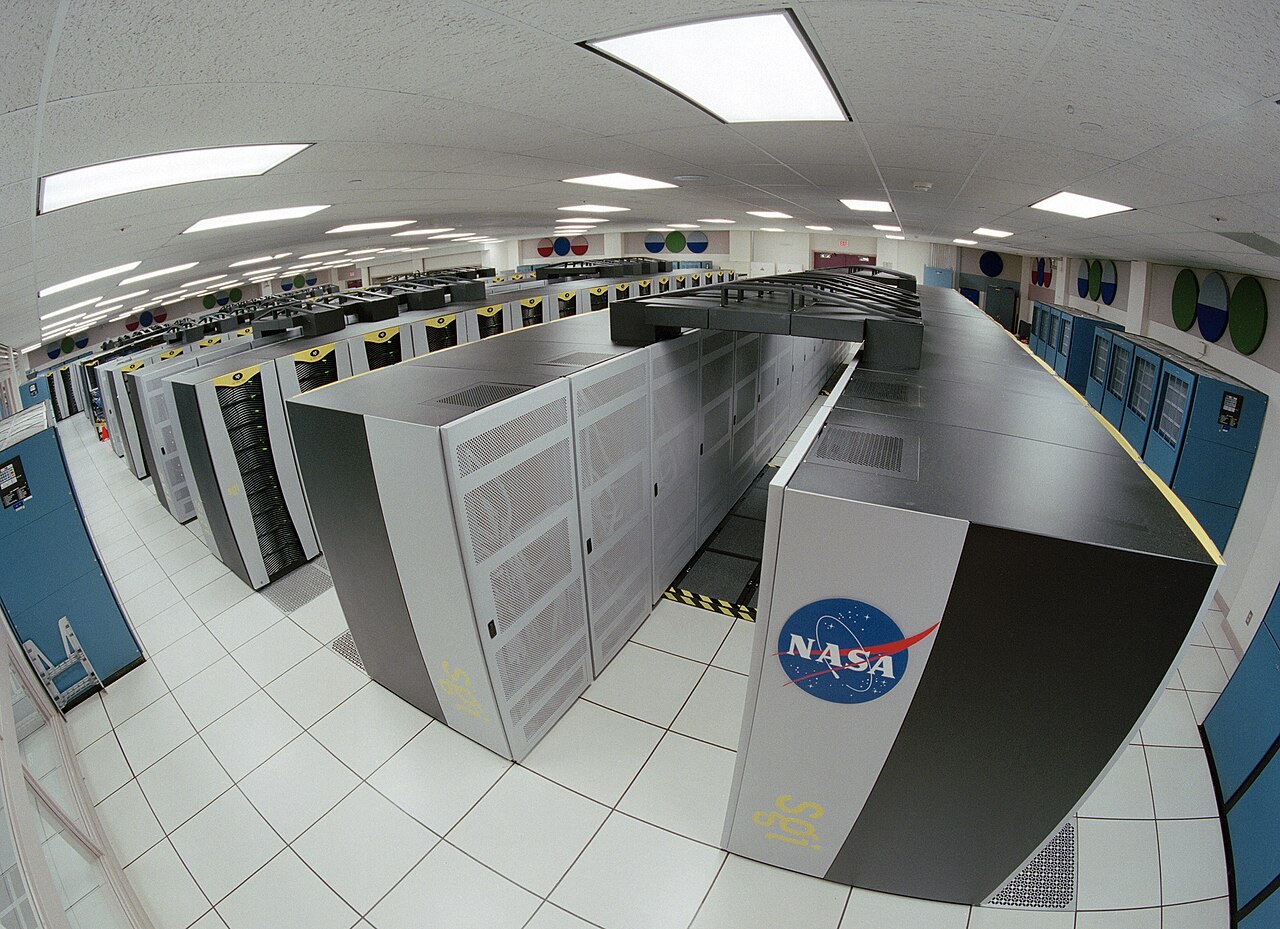
Even with clever mathematics, simulation at this scale is a supercomputing problem: vast memory, brutal communication patterns, and workloads that reward thousands of tightly linked accelerators. JUPITER’s NVIDIA GH200-based architecture was designed for exactly that profile, which is why it, rather than a smaller cluster, carried this result. There is a pleasing recursion in it: the classical machine Europe built for the exascale era is being used to rehearse the quantum era that is supposed to follow.
It is also a reminder that ‘classical versus quantum’ is the wrong frame. Quantum computing’s development pipeline runs on classical supercomputers at every stage — designing devices, verifying algorithms, benchmarking hardware, training decoders. Progress in one paradigm directly purchases progress in the other.
Reading the Record Honestly
Three cautions belong in any honest account. First, simulating a fault-tolerant system is not the same as simulating an arbitrary 104-qubit quantum computation; the structure that makes it possible is the point, and general-purpose quantum advantage is untouched by this result. Second, a simulation validates designs, not devices — fabrication realities still await the hardware teams. Third, records in this field are waypoints, and other centres will extend this one, probably soon.
What It Proves, Then
It proves that the design loop for fault-tolerant quantum computing can now be closed at triple-digit qubit scale on classical hardware: codes can be tested where they are meant to operate, decoders can be benchmarked against realistic error floods, and the gap between theory papers and engineering specifications narrows measurably. For a field whose central risk has always been discovering fatal flaws late, that is not a consolation prize. It is the work.
A Note on How Records Like This Are Made
It is easy to read ‘104 qubits simulated’ as a single breakthrough moment, but results of this kind are better understood as the visible tip of a long engineering stack. Beneath the headline sit years of work on the simulation methods themselves — tensor techniques and stabiliser formalisms refined across dozens of papers — plus the unglamorous disciplines of exascale computing: job scheduling, fault tolerance of the classical kind, and the data plumbing that keeps thousands of accelerators fed. The record belongs as much to that infrastructure as to any individual team.
That stack also explains why the record will not stand for long, and why that is fine. Each improvement in classical simulation raises the standard that quantum hardware must clear to claim an advantage, while simultaneously giving hardware teams a sharper instrument for improving their machines. The two efforts are locked in a productive chase in which the definition of progress is shared: problems that were out of reach, reached — by whichever kind of computer gets there first, and verified by the other.
JUPITER’s place in that chase is now established in a way no launch ceremony could achieve. Machines earn their reputations on results other scientists build upon, and a simulation benchmark that the quantum field must now design against is precisely that kind of result. The exascale era in Europe did not begin with this run — but this is the run people will cite when they describe what it was for.
There is a workforce dimension, too. Results like this are training instruments for a generation of researchers who will work fluently in both paradigms — writing error-correction codes in the morning and scheduling exascale jobs to verify them in the afternoon. Europe’s bet is that such people, formed inside its own programmes, constitute a strategic asset as real as the machine itself. Supercomputers depreciate in five years; the community that learned on them compounds for decades, and it is already designing the experiments that will make the next record look modest.
JUPITER will spend most of its life on climate, materials, biology and AI. But its quantum simulation record may be the result that best captures its era — the moment when the biggest classical machines and the coming quantum ones stopped being separate stories and became, visibly, a single research programme.