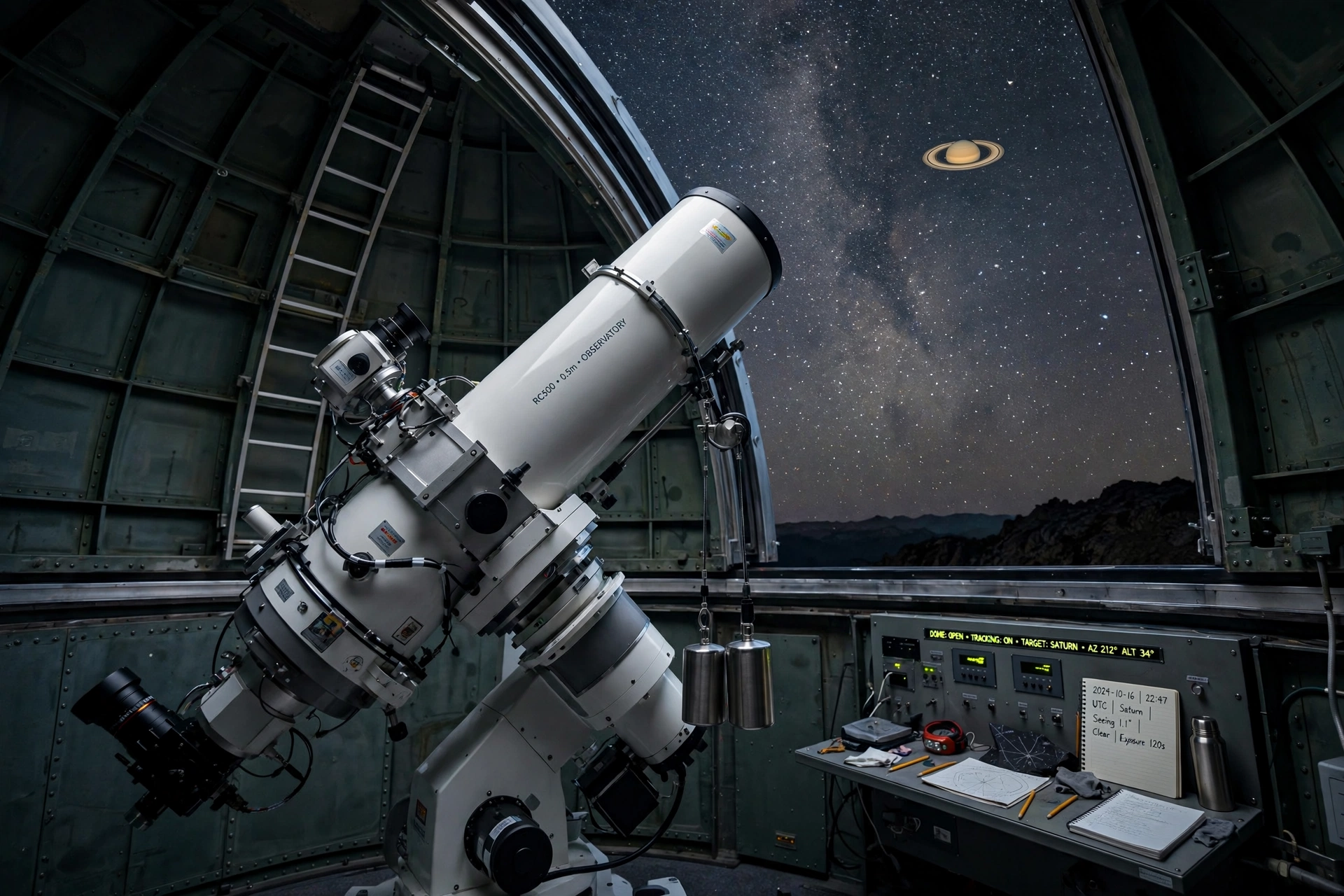
Saturn has always looked serene in photographs, a pale planet circled by bright rings. Far beyond those rings, however, sits a much messier neighbourhood, and it has just become considerably more crowded. Astronomers have confirmed 128 additional moons of Saturn, lifting the planet’s recognised total from 146 to 274. That is more moons than every other planet in the solar system put together, and by a wide margin.
The announcement does not mean 128 large worlds suddenly appeared. Each newcomer is tiny, only a few kilometres across, dark and distant, which is precisely why it stayed hidden for so long. Understanding the discovery is less about imagining new planets and more about appreciating patient observation. If you enjoy measured explainers like our recent piece on what wealth data says about Americans at 50, the same lesson applies here: the headline number matters, but the method behind it matters more.
How the new moons were found
The survey relied on the Canada-France-Hawaii Telescope, known as CFHT, on Mauna Kea in Hawaii. Researchers, including a team with University of British Columbia scientists such as Dr Edward Ashton, gathered deep images of the space around Saturn over several years. A single exposure rarely reveals such faint objects. Instead, the astronomers used a method called shift and stack, described in background material from the Canada-France-Hawaii Telescope. Many images are shifted to follow the slow motion expected of a Saturn moon, then stacked together, so a faint moving speck grows stronger while background stars blur away.
Once candidate objects were tracked long enough for their orbits to be calculated, they could be submitted for formal recognition. That recognition came from the International Astronomical Union, the body responsible for official names and designations in astronomy. Only after that step did the count move from a working list of detections to the confirmed total of 274 now being reported.
Small, tilted and often going the wrong way
The new moons belong to the irregular family. Unlike the large, familiar moons that circle Saturn neatly near the plane of its rings, irregular moons travel on distant paths that are strongly tilted, stretched into long ovals, and in many cases retrograde, meaning they orbit in the opposite direction to the planet’s rotation. Their behaviour is a clue to their origin. A moon formed alongside Saturn would be expected to settle into a tidy orbit. A moon arriving later, captured by Saturn’s gravity as it wandered past, could keep a far stranger one.
Many of the newcomers are also thought to be fragments. A larger captured moon, struck by another object or torn apart in a collision, could leave a trail of pieces following broadly similar paths. Astronomers see clusters of these small bodies sharing orbital characteristics, which is consistent with break-up events in the distant past. In that sense, counting 128 new moons is also counting evidence of ancient impacts that would otherwise leave almost no trace.
Why Saturn, and why so many?
Saturn’s gravity reaches far, and its location in the outer solar system placed it among streams of icy and rocky debris left over from planet formation. Over billions of years it could capture passing objects, and collisions among those captives multiplied the population further. Jupiter also holds a large family of irregular moons, but this latest survey has pushed Saturn far ahead in the confirmed count. The gap is partly about the planet and partly about the effort spent looking: deeper images, taken repeatedly and processed carefully, keep revealing objects that earlier surveys simply could not register.
There is a quiet caveat worth keeping. The total of 274 is a confirmed count at a particular moment, not a final inventory of everything orbiting Saturn. Still smaller fragments almost certainly exist below the limit of current detection. Each improvement in telescopes and image processing tends to move that limit, which is why moon totals for the giant planets have been revised again and again over the past two decades.
What the discovery changes, and what it does not
No new moon is large enough to change the familiar view of Saturn through a backyard telescope, and none is a plausible destination for a spacecraft in the near term. The value is scientific rather than spectacular. A fuller census helps researchers reconstruct how the Saturn system was assembled, how often collisions occurred among its captured moons, and how debris spreads or disappears over time. Comparing families of fragments can even suggest when a break-up happened, turning a list of faint points of light into a rough history book.
For the casual reader, the calm takeaway is simple. Saturn’s total is now 274, up from 146, because astronomers confirmed 128 tiny irregular moons found through years of deep imaging from Mauna Kea and recognised by the International Astronomical Union. Behind that tidy sentence sits a long process of tracking, stacking and checking, and a reminder that even our nearest planetary neighbours still hold large numbers of unseen companions.

