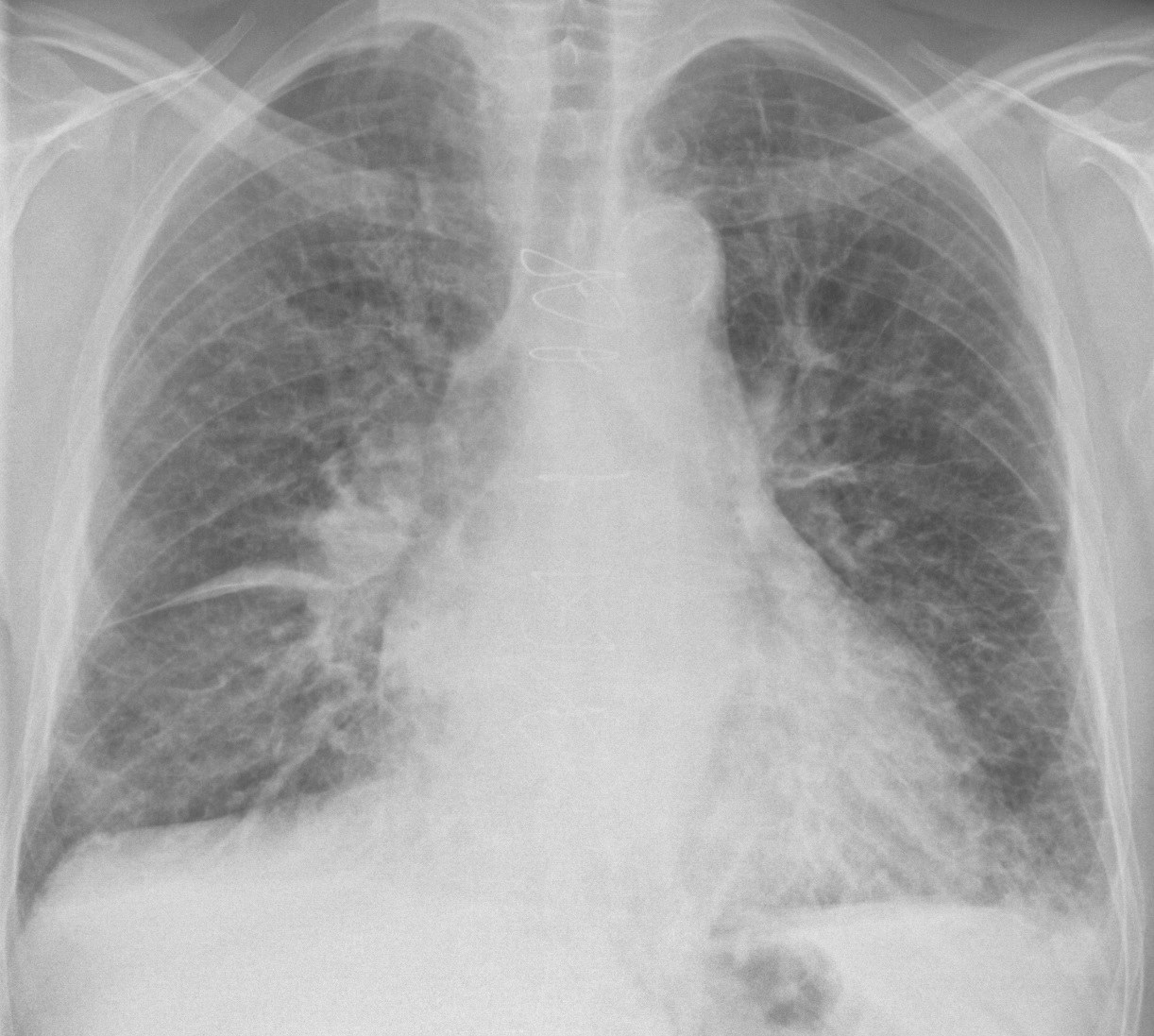
Millions of chest scans every year reveal something the patient was not being scanned for: a lung nodule, a small shadow that is usually harmless and occasionally the earliest visible sign of lung cancer. What happens next — how fast the nodule is evaluated, by whom, and with what tests — varies enormously between hospitals, and that variation costs lives. The American College of Chest Physicians (CHEST) has now published a framework that lays out six steps for building a proper lung nodule programme, from first detection to final diagnosis, with validated biomarker testing as part of the pathway.
The framework’s premise is organisational rather than technological. The tools for evaluating nodules — follow-up imaging, risk models, blood-based biomarkers, bronchoscopy, biopsy — already exist. What many health systems lack is the programme around them: the registry that ensures no nodule is forgotten, the team that reviews cases consistently, and the clock that keeps evaluation moving at the speed the biology demands.
Why Nodules Get Lost
Incidental nodules are a classic systems failure. A scan ordered in an emergency department for an unrelated complaint reveals a nodule; the finding sits in a report; the patient returns to a primary care doctor who may never see it; the recommended follow-up, months later, competes with everything else in a busy life. Studies of real-world practice repeatedly find that a substantial share of recommended follow-ups simply never happen — not from negligence, but from the absence of anyone whose job is to make sure they do.
Meanwhile the clinical stakes run in both directions. Miss a cancer and a curable stage becomes an incurable one; over-pursue benign nodules and patients endure anxiety, radiation, invasive procedures and cost for nothing. A programme’s job is to thread that needle at scale, patient after patient, which is why CHEST’s framework — published through the American College of Chest Physicians — treats the pathway as a designed system rather than a sequence of individual judgements.
The Role of Biomarker Testing
The framework incorporates validated biomarker testing, including the blood-based testing developed by Biodesix, as a decision aid in the middle of the pathway. The clinical problem these tests address is the large middle category: nodules whose imaging appearance is neither clearly benign nor clearly malignant. For those patients, a biomarker result can sharpen the risk estimate that decides between watchful waiting and invasive biopsy — tilting the balance toward earlier, more confident decisions.
Used well, biomarkers do not replace clinical judgement; they discipline it. A programme that combines structured imaging review, established risk calculators and biomarker data can reserve its biopsies for the patients most likely to benefit, and its reassurance for the patients most likely to deserve it.
Building the Programme, Step by Step
Across its six steps, the framework covers the full anatomy of a working programme: capturing every nodule into a registry at detection; standardising risk assessment; defining the team’s composition and review rhythm; integrating biomarker and advanced diagnostic options; tracking patients through to diagnosis or safe discharge; and measuring the programme’s own performance so gaps surface as data rather than anecdotes. None of the steps is glamorous. Together they are the difference between a hospital that has nodule expertise and a hospital that has a nodule system.
What This Means for Patients
For a patient told they have a lung nodule, the practical questions are simple: Does anyone own my case? How long until I know? What happens if I miss an appointment? A programme built on this framework can answer all three — a named team, a defined timeline, and a registry that notices absence. That administrative clarity is itself a form of care, because the anxiety of the unknown is one of the heaviest burdens a nodule diagnosis imposes.
Systems Beat Heroics
The Follow-Up Gap Is a Known Killer
It is worth dwelling on how ordinary the failure mode is, because it explains why a framework — rather than a new scanner or drug — is the right intervention. The typical lost nodule is not lost through incompetence. It is lost at a handover: a report filed after a patient has left the emergency department, a recommendation phrased as a suggestion, a follow-up interval longer than any individual’s memory, a patient who moved, changed doctors or simply never understood that the small spot mattered. Each step is forgivable. The accumulation is not, and it is exactly the class of problem that registries and ownership exist to solve.
Programmes built on this model also change the emotional texture of the diagnosis for clinicians. A pulmonologist who knows the registry will catch what she misses can give patients honest probabilities instead of defensive over-testing; a radiologist whose recommendations enter a tracked system writes them differently. Systems shape behaviour quietly, in both directions.
The framework’s publication therefore matters beyond the hospitals that adopt it formally. It defines what good looks like — the standard against which a patient’s family, a hospital board or a court can ask why a nodule was found, noted and never followed again. Standards have a way of becoming expectations, and expectations have a way of becoming practice.
Lung cancer remains the deadliest major cancer largely because it is found late. The cheapest stage shift available in modern medicine is not a new drug; it is making sure the nodules already being photographed every day are followed to a conclusion. CHEST’s six-step framework is an instruction manual for that unglamorous, life-saving work — and hospitals that build to it will find their outcomes improving for reasons that have nothing to do with luck.